I wanted to do my bit for the Easter imagery, so here is my cousin, in all his glory (quite a few years ago…).

I wanted to do my bit for the Easter imagery, so here is my cousin, in all his glory (quite a few years ago…).
(If you speak Spanish, you might want to read my cousin Pachi’s account, below this one in English. Thanks to Kathe for the photographs.)
LAS FALLAS
 For the four days prior to 19 March (San José, the carpenters’ patron saint – and Valencia’s (see Y is for Yo for more information on patron saints)), Valencia turns into a concoction of noise, music and smoke. Every day, to make sure that you don’t miss out on every single celebratory moment, you will be woken up at 8am by the despertetá, a series of very loud noises designed to get everyone out of bed and into the streets. In the afternoon, from the first Sunday in March, prepare yourself to have your eardrums challenged by the “mascletás” created by extremely powerful bangers which are set off over the noise and chanting of the population. If fireworks are your poison, then you can enjoy what is probably one of the most impressive fireworks display in the world. ‘La Nit del Foc’ in Valencia, the night of fire, attracts around 650,000 people every year at 1.30 in the morning before San José.
Finally, on the last day of the Fallas, Valencia is flooded by flames and smoke as all the ‘ninots’ burn. The ninots are wonderfully artistic figures made of different flammable materials. It is these ninots, when put together to create a work of art, that make a “falla” which gives this celebration its name. . Months of work go into these figures which surrender to their fate on the last day of las Fallas. All, except one, the competition winner.
 You might be asking yourself: “Why?” The answer is a common one: tradition. Prior to the 17th century, the carpenters and artisans of Valencia would celebrate the arrival of spring by burning the holders which had supported the oil lamps used to give light in the winter. On the night before San José, they would burn piles of unwanted lamp holders and any other bits of leftover wood. With time, the carpenters began to dress up these unwanted items to create parodies of the middle classes and the Church and satirise society.
Gradually, this event became more popular and sophisticated and of course, controversial. After trying to suppress these celebrations over decades, the Mayor finally succumbed and in 1932, the Council became the official organiser of the event. Not only that, what was initially an event financed by the people and local businesses, became a state funded event.
Now Las Fallas has become one of the most popular celebrations in Spain – great fun for those wishing to party all night but not so great for people like my aunt, who are left unable to sleep for one week.
For more on loud Spanish traditions, see M is for Moros y Cristianos.
 LAS FALLAS – The Spanish version
Fiestas tradicionales valencianas, que han sabido conservar el espíritu popular, hasta donde lo permiten los tiempos modernos. Antiguamente, se financiaban íntegramente con aportaciones de los vecinos y empresarios de los barrios donde se levantaba el monumento. Hoy día, por su interés “cultural”, la financiación mayoritaria corre a cargo de organismos públicos (ayuntamiento, distritos, etc.).
El reinado de la pólvora, organizada (despertá, nit del foc, cordás y mascletás), y desorganizada (la guerra en la calle). Las despertás se hacen a las 8 de la mañana, quemando pólvora para avisar a los vecinos que empieza la jornada; las mascletás empiezan el primer domingo de marzo; los castillos de fuego se concentran los sábados, hasta el último fin de semana, que se queman uno al día –el del día 18 es el castillo estrella-; y las cordás, muy restringidas y controladas, por accidentes pasados –no me extraña-.
Las tardes de los días de fallas: o se participa o visita el engalanamiento floral de la Virgen de los Desamparados (la cheperudeta, es decir, la jorobadita, en valenciano), o se va a dormir la siesta, porque el resto del día y noche estarán ocupados. Los amantes de los toros tienen las primeras corridas grandes de la temporada taurina, que se abre en la plaza de Toros de Valencia, corridas de San José.
Las fallas en sí podrían verse como un subgénero de la escultura, que se trabaja con papel-cartón y madera. Auténticos artistas que trabajan la forma, la belleza artística, y el fondo. La falla no deja de ser un vehículo para plasmar la vida de la ciudad, del país y del mundo, desde un punto de vista crítico y satírico. Sus dimensiones varían entre los 5 metros de alto, y superficies de 25 m2, a las de categoría especial, que pueden alcanzar 20 m de alto, y 200 m2 de superficie –a ojo–. La quema final supone purificar los pecados pasados, previamente destapados, como el fuego purificaba el pecado. No hay que olvidar que se celebra un día muy próximo al equinoccio de primavera. Yo vincularía el origen a una costumbre rural: terminada la poda en el campo, cuando empiezan los frutales a florecer, se quemaban sarmientos y ramas, para limpiar y abonar con ello los campos. Por la época, sospecho que algo tiene que ver.
Cada falla tiene su falla infantil, dedicada a los niños del barrio, con temas infantiles –cuentos, dragones y princesas-, sin crítica especial. Apenas se alzan dos metros de tierra, y ocupando diez metros cuadrados normalmente.
Como es fiesta callejera, hay muchos casales falleros donde se reúnen las gentes del barrio, para charlar, beber, comer, dormitar, … Merece la pena hacer alguna parada para probar las primeras horchatas de la temporada con fartons, o un buen chocolate con buñuelos de calabaza.
Copyright notice: Please, do not hesitate to contact me if these Ninots are under restricted copyright. Just leave a comment below, all comments are moderated.
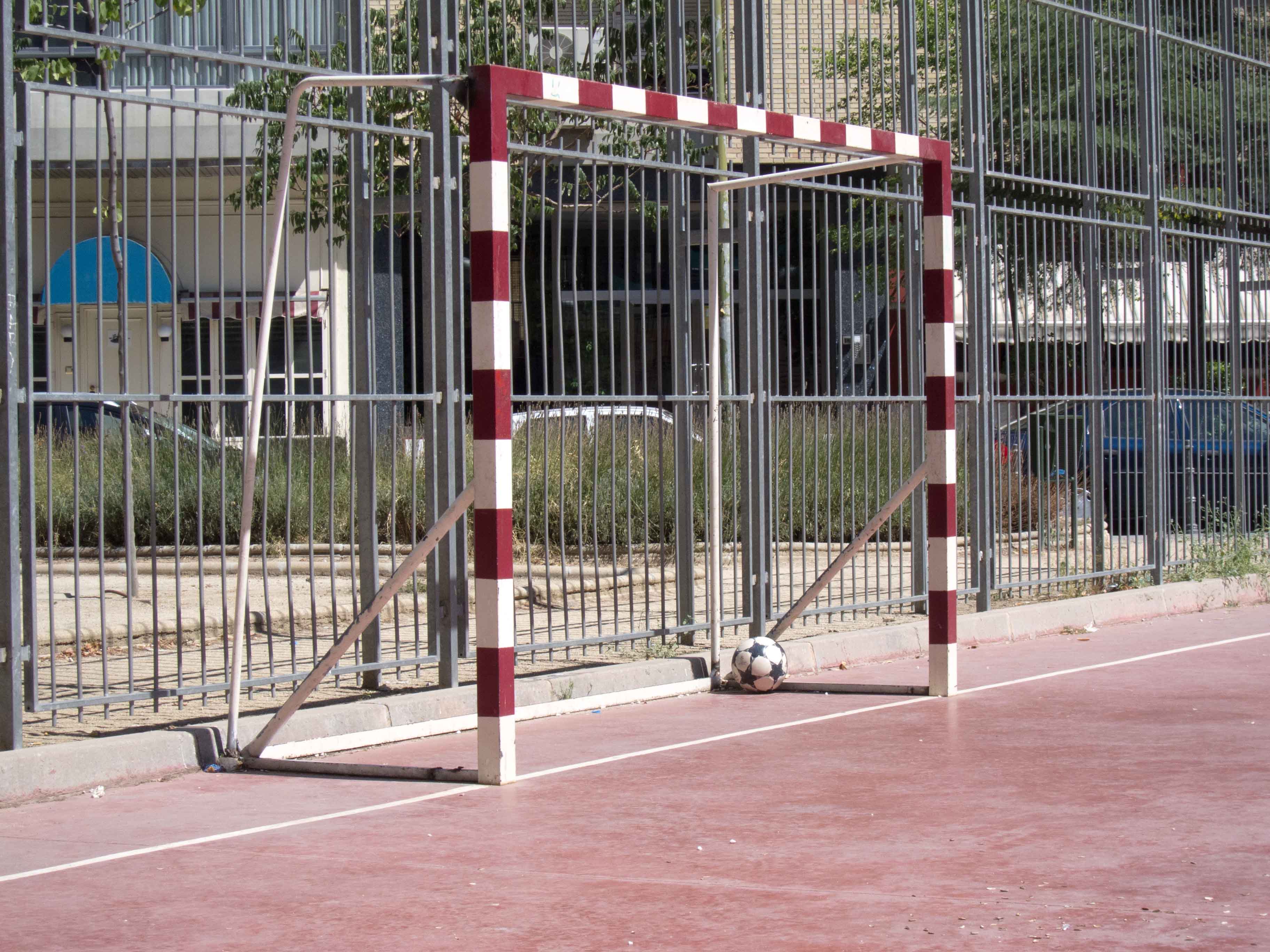 It’s Sunday!!!
If you are into football, this is your day.
If you are into football and you want to get rich quickly, today could be your day – if you play the Quinielas.
These are the football pools, fill in a little piece of paper. Cross out the relevant boxes for each football match. Give each match a “1” if you think the home team is going to win, a “2” if you think the visitors will be the winners and a “X” for a draw.
TIP: Don’t go for the obvious winners – if you get predict an unlikely win, you’ll get more cash.
¡Suerte!
I came across this lovely post by following @gospain.
It’s a simple tour through what he terms “The Seven Wonders of the World in Spain”.
If you’re interested in architecture, check it out.
Gracias, Damian! (That’s the guy who put the post together and runs the site.)
http://gospain.about.com/od/spanisharchitecture/ss/seven_wonders_6.htm
‘El Guernica’ was created as a response to the bombing of the town of Guernica in the Basque country. In April 1937, the German and Italian troops who were helping the rebels under Franco bombed the town with the aim of attacking its civil population. Following the request of the president of the Spanish republic, who still hadn’t succumbed to Franco’s rule, Picasso, already living in France, depicted the massacre in a painting to be shown in Paris that year.
 The painting is a large black and white canvas, (3.50m x 7.80m) painted in a recognisable Picasso style (cubism). Picasso didn’t want the painting to return to Spain until the country became a democracy again and so it was housed in the MOMA in New York until 1981. It was then transferred to an annexe in the Prado Museum, the Cason del Buen Retiro. Since 1992, the painting has been hanging in Madrid’s Museo de Arte Reina Sofia, a public museum dedicated to contemporary art.
‘El Guernica’ is an emotive reminder of the horrors of war. As such, it hangs outside the UN’s security council’s entrance in New York. When in 2003, Colin Powell delivered a speech to convince the world of the need to attack Iraq, the copy of the Guernica was covered with a drape.
Picasso had wished for the US to keep his painting safe until Spain became a democracy once more. I wonder what he would have made of this.
During my research for The A to Z of Spanish Culture, I came across this video put together by the national TV channel, about the return of Picasso’s Guernica to Spain.
Unfortunately, I can’t embed the video here, but here is the link.
http://www.rtve.es/alacarta/videos/te-acuerdas/acuerdas-guernica-regresa-espana/1193241/
ENJOY!
O is for Olé, toros, flamenco, fiestas, sangría, cervezas, mañana…. and any other stereotype you can think of.
My friend Victor shared this link with me through Facebook. (He is a real friend too.)
It challenges the Spanish stereotypes. http://www.guardian.co.uk/world/2012/jan/26/spanish-stereotypes-we-have-mondays-too?
Let me know if you have any favourite ones – those you love as well as those you hate.
I mainly bought this book for inspiration, to see how someone else had tackled the task of giving a taste of Spain to those living outside it.
Errant i
Ben Curtis’ book is a warm book; it’s an honest book; it’s a funny book.
If you know Madrid, you will love it. If you’ve never been there, it will give you a good idea what life might feel like as a visitor. It’s also interesting to see the protagonist escape Madrid and his vision of some of Spain’s traditions, such as the Fallas.
I have yet to see anything in Spain quite so astonishing as the civic irresponsibilities that take place during Las Fallas. There is something wonderfully liberating about the whole thing, that makes you realise how much the British might benefit if the powers that be were just a little less up-tight about health and safety.
He also describes other lesser know Spanish festivities, such as the “Concurs de Castells” (the castle competition) in Cataluña, the human towers competition.
I’ve certainly been inspired by his book, as well as entertained!
Thanks, Ben!
For those of you with access to BBC2, just thought I’d let you know about the programme “Rick Stein’s Spanish Christmas” out on BBC2 on Weds 21st December at 9pm.
http://www.bbc.co.uk/programmes/b018nslp
¡Qué aproveche!
Can you spot Colón? (Colombus.)
He discovered America 519 years ago today. Can you spot him in his own plaza, in Madrid?

The 12th October is a national holiday in Spain, so if you are thinking of visiting the country on that day, be warned, all the shops will be closed!
So, happy Día de la Hispanidad, everyone. And Happy Saint’s Day to all those called Pilar – and thanks to all of those who remembered that I go by that same name!
In the spirit of the A to Z book, I’ll expand (a bit) on Colón.
Colón is also a very popular detergent in Spain – it’s even got its own song!
Quiero ser un bote de Colón
Y salir anunciado por la televisión.
Sung by the kings of the Movida, Alaska y los Pegamoides.
(For more on La Movida, see the A to Z’s chapter M is for Movida, coming soon…., find out when by clicking here.)
If you are talking about Colombus, make sure that you accent the word, or else you will be talking about his colon.
(Apologies for the slightly odd writing style today – I’m not sure whether I’m supposed to take the day off, being exiled and everything…)
This Wednesday 12th October it’s a holiday in Spain.
The day Colombus discovered America and also the day in which the virgin appeared on top of a pillar – el día del Pilar, my Saint’s day!
So, many people will take Monday and Tuesday off to, thus creating a “bridge” between Sunday and Wednesday, during which they can take time off.
The “puentes” (literally, bridges) are those periods of time when a festive day during the week allows for other days to be taken off.
Happy bridge to all of those in Spain!

Virtual flowers for all those called Pilar.

 The A to Z of Spanish Culture