E is for Electroduende

As someone who used to watch quite a lot of TV as a teenager, I was a great fan of “La bola de cristal”, a tv programme from the 80s (The Crystal Ball).

This programme was aimed at children, teenagers and young adults, targeting each age group by segments. Assuming that the older the person, the later they would be getting up in the morning, La Bola de Cristal structured its content to appeal to an older age group as the programme progressed. (For photos etc, visit the official site http://www.rtve.es/television/la-bola-de-cristal/)

La bruja Averia. Image from official website http://www.rtve.es/television/la-bola-de-cristal/

The ‘electroduendes” (electric elves, see also D is for Duende), were irreverent creatures who artistically portrayed their creators’ political views. For example, the Bruja Averia (The Fault Witch) has a range of slogans including “viva el mal, viva el capital” (Hoorah for Evil; Hoorah for Capital).

Although the form seemed to be aimed at young children (puppets whose puppeteers had trained with Jim Henson), the underlying themes of the Electroduendes were definitely of interest to older viewers.

La Bola de Cristal ended with a segment hosting the most popular pop bands of the time. In fact, the second half of the programme was hosted by Alaska, who with Kaka de Luxe and Alaska y los Pegamoides (‘pegamoides’ has no translation, sorry!) became one of the most famous punk stars in the 80s. (She is still going by the way, still featuring in Spanish culture). Nostalgia for what was an exiting era in Spain can now be satiated through the purchase of DVDs of the series or many You Tube appearances.

If you speak Spanish and would like to find out more about the programme, or just have a look at the videos and pictures, visit http://www.rtve.es/television/la-bola-de-cristal/ For a different type of Spanish TV personality, see E is for Espinete.

(Taken from the chapter M is for Movida.)
H is for Huevos Rotos

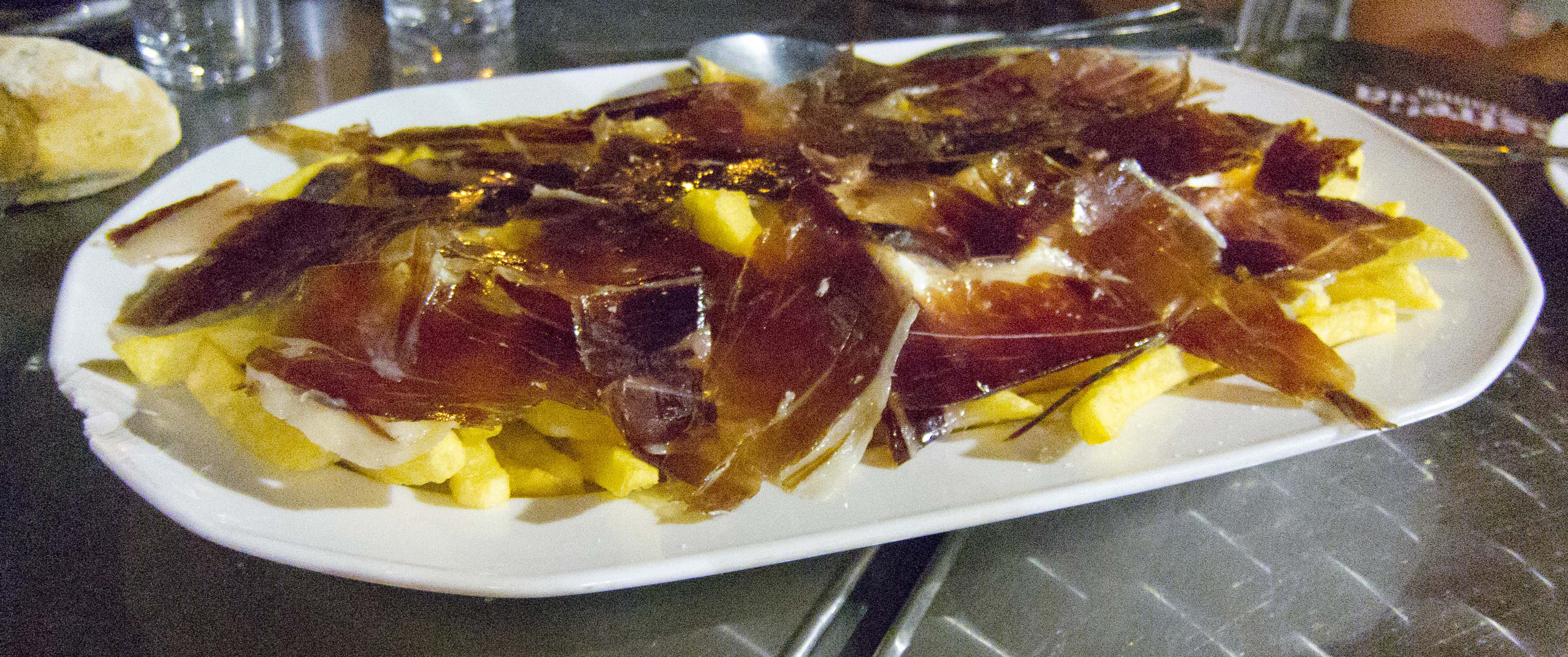
A bed of home made chips covered with two (or more) eggs, ready to be smashed or broken allowing the yolk to flow over the chips. Often accompanied by jamon (Spanish ham) or chorizo (Spanish spicy sausage). I’ll never get tired of them. 

Recommended for those wanting to raise their salt or cholesterol levels.

(Taken from the chapter T is for Tapas.)

B is for Bodorrio

“Bodorrio” is one of the colloquial ways for “Boda” – wedding.

It refers to a big wedding – although big in Spain usually means lots of food!!!!! There are not many traditions that take place in Spanish weddings, making the reception more like a big party. First course (primer plato); second course (segundo plato); dessert; cake; coffee etc In addition to all the “aperitivos” you will get before the meal. And then usually, a free bar and lots of dancing until well into the night (4 – 6pm).

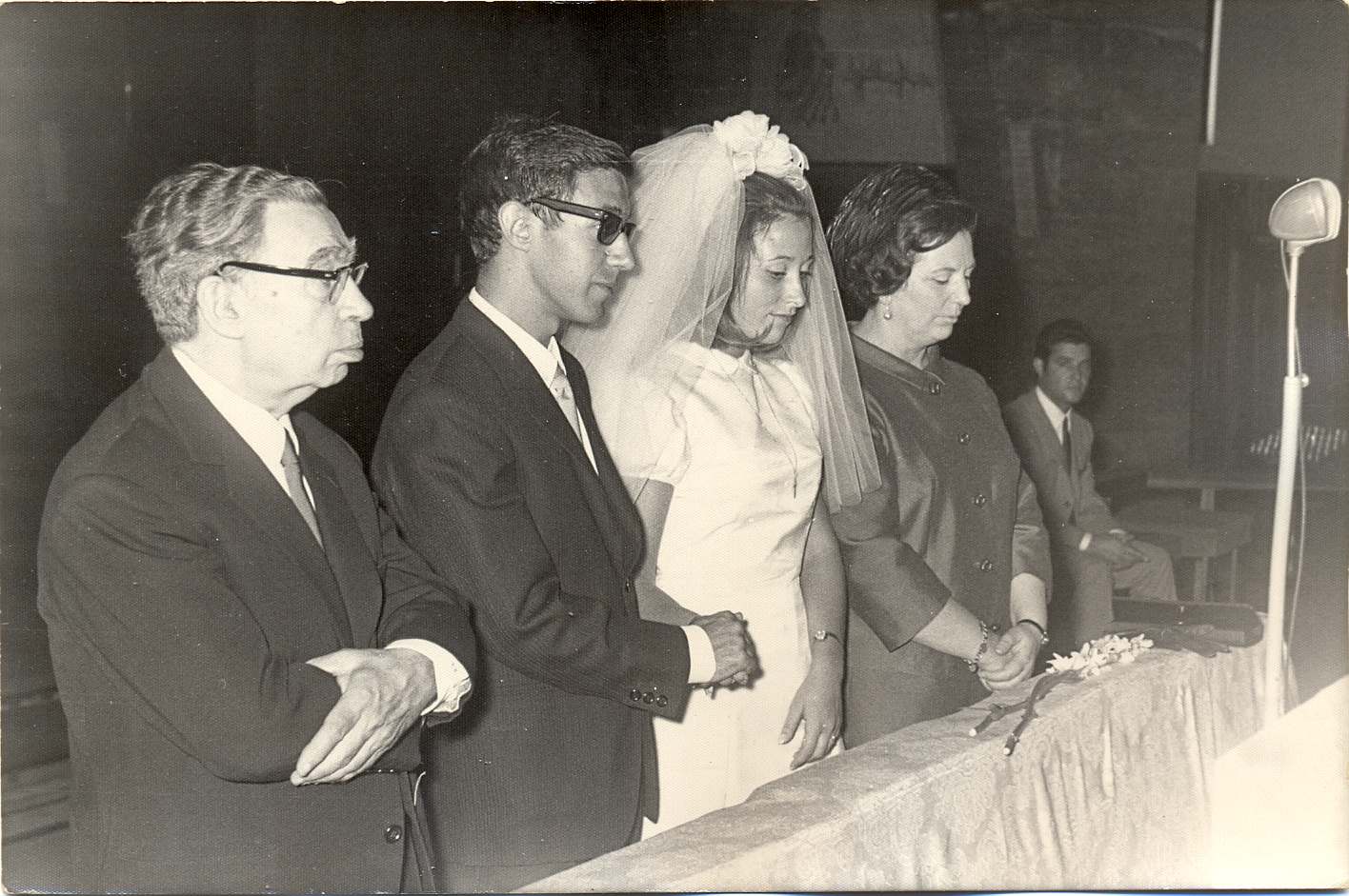
The microphone on the right should give you a clue about this wedding's decade. Things have changed (a bit). Above, my parents and respectives. My mother's mum and my father's dad. Another way in which my parents innovated. Curious as to why?

I do like Spanish weddings, although I think they have become something of a “commercial transaction”.  Before I elaborate on this, let me share with you something I read today that prompted me to write this post.

If you are invited to a dinner party, you can bring a gift – flowers, wine, or whatever counts as a friendly gesture. If instead, you leave $100 on the table at the end of the meal, you will destroy the atmosphere because you have turned a social interaction into a commercial exchange.

(Harvard Business Review article “The Unselfish Gene” July/Aug 2011 Fayard & Weeks)

If any of you have ever received a wedding invitation with an account number inside it, you will know what I mean.

Wedding lists are still tradition in Spain, but as couples marry later on in life and already have their 8 piece set of eggholders, their dishwasher and flat TV in place, what use is a Wedding List for them? Much better just to get the cash! So if you are invited to a Spanish wedding, be ready to dish out 100 EURO per head.

Or, if like me, you still prefer to keep this a social occasion, you can choose to ignore all social conventions and give them a personal gift! I haven’t been spat at yet (neither literally nor metaphorically) – at least not to my face.

Do leave your favourite/hated Spanish (or other) wedding traditions here, if you wish. And be ready to shout:

¡¡¡¡VIVAN LOS NOVIOS!!!!

To incite the rest of the guests to shout:

¡¡¡¡VIVAAAAAAAAAA¡¡¡¡¡¡¡

D is for Duende

No book on Spanish culture can be complete without mentioning

Federico Garcia Lorca.

I have done more than mention him. This chapter of the book is a homage to one of the bravest, most talented poets and dramaturgs I have ever come across. He deserves at least a chapter, a podcast and a blog cateogry – and much, much more…

This podcast is a reading of the full chapter D is for Duende. If you enjoy the podcast, why not visit the blog http://ilovegarcialorca.blogspot.com

And remember you can download our podcasts from this site or from itunes.

Listen to the recording of D is for Duende

Download this episode (right click and save)

T is for Turismo

The tourism industry has always been strong in Spain. As a Londoner, I am always amused and surprised by the range of adverts for Spain and its different “autonomias” (autonomous regional governments).

While writing the article “I is for inglés” for the e-book “The A to Z of Spanish Culture”, I did a bit of research on the very famous slogan used by the Spanish government mid 20th century “Spain is different”. In doing so, I found this very amusing blog post in the Spanish newspaper “El Pais”. It’s written in Spanish, but it’s got plenty of posters in it to amuse you. And of course, all the slogans are in English.

Échale un vistazo haciendo click aquí.

P is for Podcast

Celebrate the summer with our new podcast “S is for Sobremesa and Siesta”.

Subscribe to the series via atozofspanishculture.com/podcasts/ or by clicking on the RSS icon on the right hand bar.

Listen to S is for Sobremesa here.

Listen to this episode


R is for Refrán

Thanks to @kathe_sl for inspiration for this post.

Kathe is my oldest friend ever (we used to play Charlie’s Angels together) and she now lives in Valencia (while I live in voluntary exile in London). She has just let me know that she knows the owners of ThinkSpain.com, who I follow on Twitter to keep up with what’s going on in Spain.

As Kathe mentions in her tweet message:

“El mundo es un pañuelo”

This REFRAN (saying) literally means, the world is a handkerchief – the English equivalent of “it’s a small world”. This has given rise to the popular scribble on the CARPETAS (folders) of teenagers:

“El mundo es un pañuelo y tú eres mi moco preferido.”

(The world is a handkerchief and you are my favourite boggie.)

Hm, I’ll leave you with this sticky thought on a sticky August London afternoon.

A is for Agosto

Ode to August

Agosto – the wonderful summer of August.

The beaches are completely packed. Not one visible grain of sand.

Agosto – the wonderful summer of August.

Strutting around during the day in your best top, enjoying the over 35 degrees heat, you almost catch a cold when you go into the cinema, shivering under the air-con.

Agosto – the wonderful summer of August.

In the urban neighborhoods, you enjoy the summer sounds – of people chatting, of crockery clinking against the plate, of tv’s blasting… At 12am as you try to go to sleep, as you need to go to work the next day.

Agosto – if you play it right, you can enjoy the silence of the city.